
Sensor Solutions for Industrial Automation Applications
KALEN sensors support non-contact detection, position monitoring, object counting and material sensing across machinery, conveyors, packaging systems and automated production equipment.

Start with the detection task, then choose the sensing technology.
Industrial sensor selection should begin with the target, sensing distance, installation space and required control signal. KALEN offers inductive, capacitive, magnetic and photoelectric sensing technologies for different detection tasks in automated machinery and production equipment.
Explore the application areas below to understand which sensing technologies can be considered for each detection task.
Find sensor technologies by application.

Conveyor Systems
Sensors can detect, count and monitor products moving through conveyor and material handling systems.
Object presence detection, product counting, position confirmation, metal part detection and package detection.

Packaging Machinery
Sensors support product presence detection, package counting, position monitoring and machine sequence confirmation in automated packaging equipment.
Product presence, package counting, container detection, position monitoring and machine sequence confirmation.

Assembly Equipment
Non-contact sensors help confirm part presence, position and assembly sequence conditions in automated equipment.
Metal component presence, part position confirmation, cylinder position sensing, assembly sequence verification and general object detection.

Machine Tools & Automated Machinery
Sensors provide non-contact position and presence feedback for moving components, fixtures and machine mechanisms.
Metal position detection, end-position confirmation, machine component presence, fixture detection and automated sequence control.
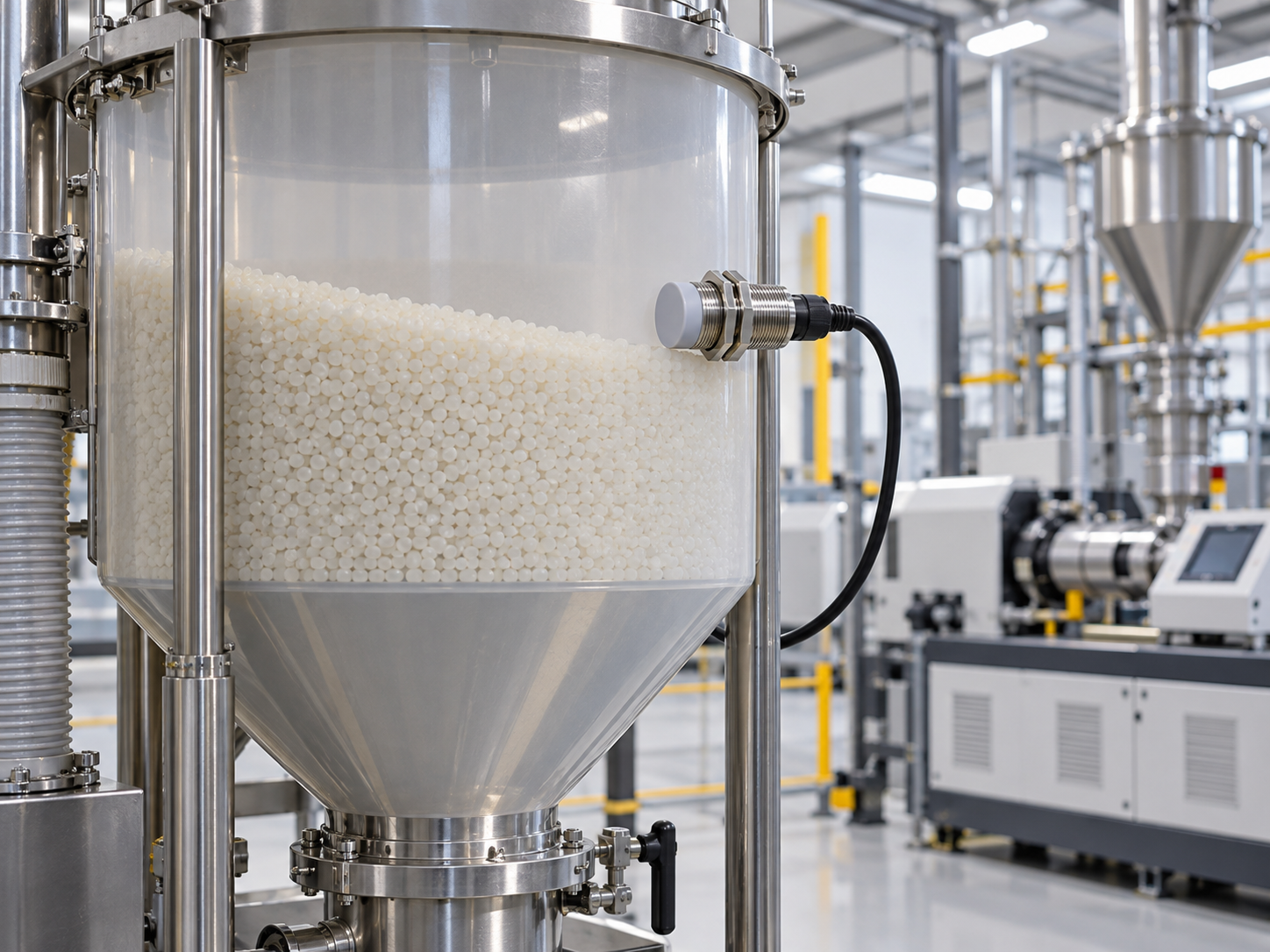
Material & Level Detection
Capacitive sensing can be considered for selected plastics, liquids, powders and granular materials where target characteristics and installation conditions are suitable.
Plastic material detection, liquid presence, powder presence, granular material level and selected non-metallic material detection.

Object Counting & Position Detection
Photoelectric sensing is widely used where moving products and objects must be detected, counted or monitored without physical contact.
Product counting, object passage detection, package presence, edge or position monitoring and conveyor detection.
Match the sensing principle to the target.
Inductive Sensors
Best suited to non-contact detection of metal targets.
View category →Capacitive Sensors
Can detect selected metallic and non-metallic materials, including plastics, liquids and powders depending on application conditions.
View category →Magnetic Sensors
Used for magnetic target and suitable cylinder or piston position sensing applications.
View category →Diffuse Photoelectric Sensors
Detect objects from light reflected directly by the target.
View category →Retro-Reflective Photoelectric Sensors
Detect objects by interrupting light returned from a separate reflector.
View category →Through-Beam Photoelectric Sensors
Detect objects by interrupting a direct beam between separate transmitter and receiver units.
View category →Five questions to define the sensing requirement.
What is the target?
Identify whether the target is metal, plastic, liquid, magnetic, opaque or another material.
What sensing distance is required?
Confirm the practical distance between the sensor and target or between optical units.
How much mounting space is available?
Confirm housing size, mounting direction and installation access.
What output does the controller require?
Confirm NPN, PNP and switching logic requirements according to the control system.
What are the operating conditions?
Consider background, ambient light, contamination, surrounding materials and machine installation conditions.
Connect the detection task to a sensing principle.
Final sensor selection depends on target characteristics, sensing distance, installation conditions and control requirements.
Sensor selection support for machine builders and automation projects.
KALEN supports machine builders, automation integrators, distributors and industrial buyers with application-based sensor selection and OEM/ODM requirements.

Share the target, distance and installation conditions for model selection support.
Match output and switching requirements to the machine control system.
Discuss housing, cable, connector and mounting requirements.
Discuss labeling, packaging and project-specific purchasing requirements.
Common questions about selecting sensors for automation applications.
Which sensor is best for detecting metal?
Inductive sensors are commonly used for non-contact detection of metal targets in industrial automation.
Which sensor can detect plastic or liquid?
Capacitive sensors can detect selected plastics, liquids and other non-metallic materials depending on the target and installation conditions.
Which sensor is suitable for object counting on a conveyor?
Photoelectric sensors are commonly used for object counting. The suitable diffuse, retro-reflective or through-beam method depends on the target, sensing distance and mounting conditions.
Which sensor can detect cylinder piston position?
Magnetic sensing can be used for suitable cylinder and piston position applications where a compatible magnetic target is present.
How do I choose between diffuse, retro-reflective and through-beam photoelectric sensors?
Diffuse sensing uses target reflection, retro-reflective sensing uses a reflector, and through-beam sensing uses separate transmitter and receiver units.
Can KALEN help select a sensor for my machine?
Yes. Send the target material, required sensing distance, installation conditions, output requirements and expected quantity for application review.
Tell us what you need to detect.
Send us your target material, sensing distance, installation conditions, output requirement and expected quantity. KALEN will help narrow the suitable sensing technology and model.